business analytics capstone project
I was tasked to apply what I've learned about making data-driven decisions to a real business challenge faced by global technology companies like Yahoo, Google, and Facebook.
00

problem
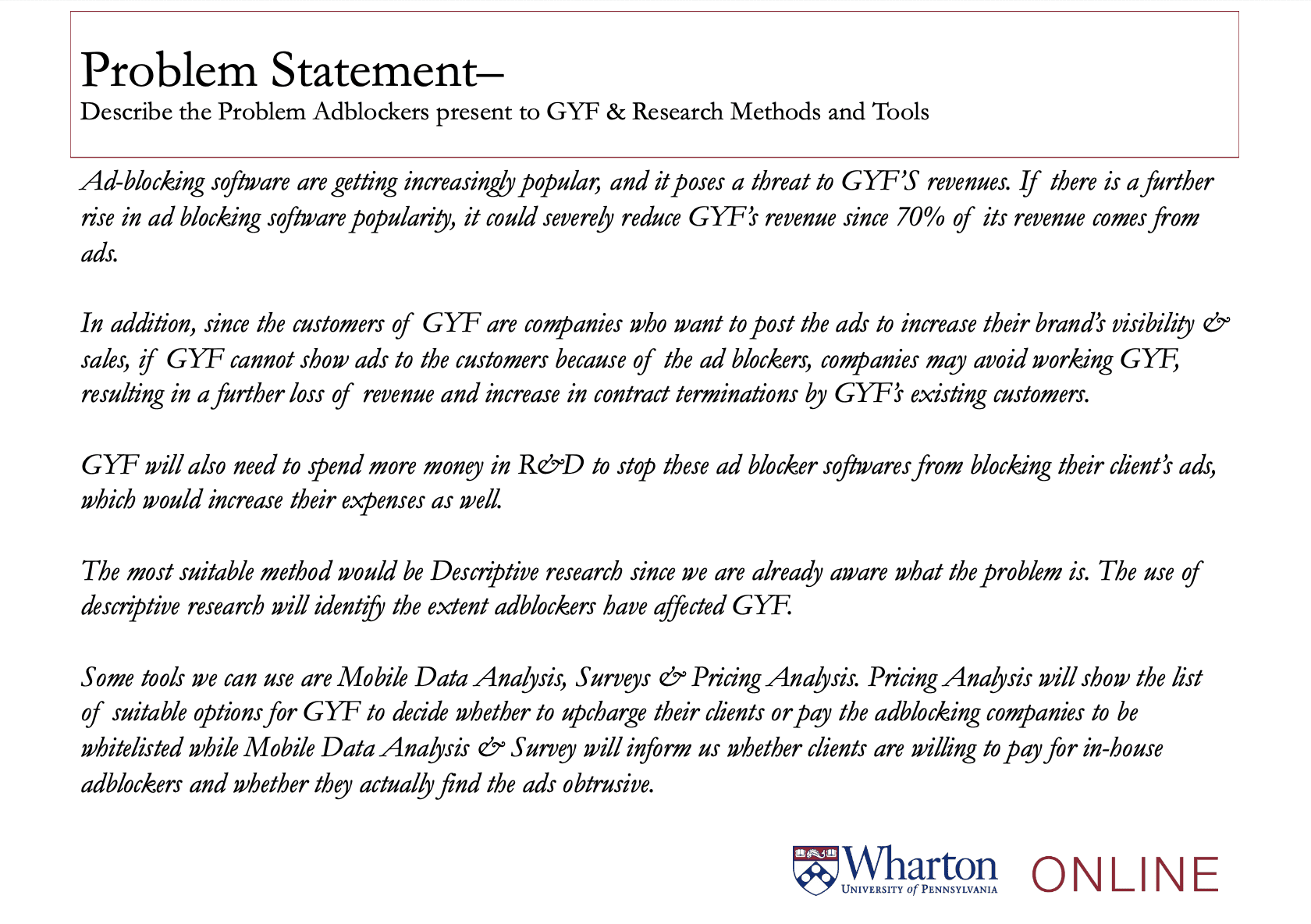
I was tasked to apply what I've learned about making data-driven decisions to a real business challenge faced by global technology companies like Yahoo, Google, and Facebook. GYF is a fictional digital media company that earns 70% of its revenue from ads. Ad-blocking software is becoming increasingly popular, which means ads are being blocked before users even see them. This creates a triple threat — advertisers lose confidence and may terminate contracts, GYF loses ad revenue, and GYF has to spend more on R&D just to counter the blockers. Essentially, the more people use adblockers, the less GYF can deliver on its core promise to advertisers.
solution
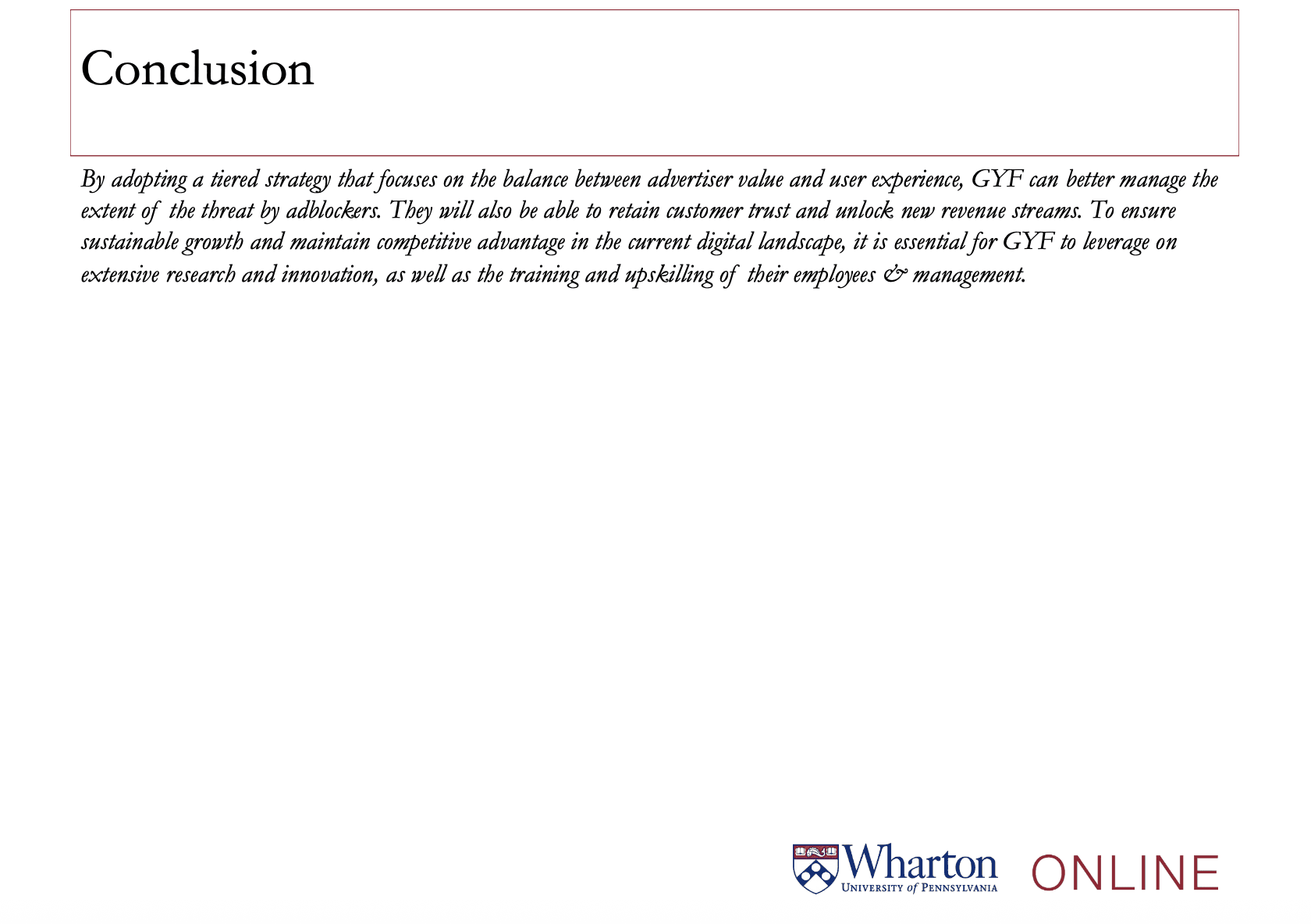
I created a tiered strategy that will be used in responding to the increasing popularity and availability of “adblocking” software, which could have significant negative repercussions for GYF’s business.
This is a project done for the online, non-credit course in Wharton's Business Analytics Specialization.
I tackled a real business problem for GYF, a digital media company whose ad revenue was under threat from the rising popularity of ad-blocking software — with 70% of its revenue dependent on ads, the stakes were high.
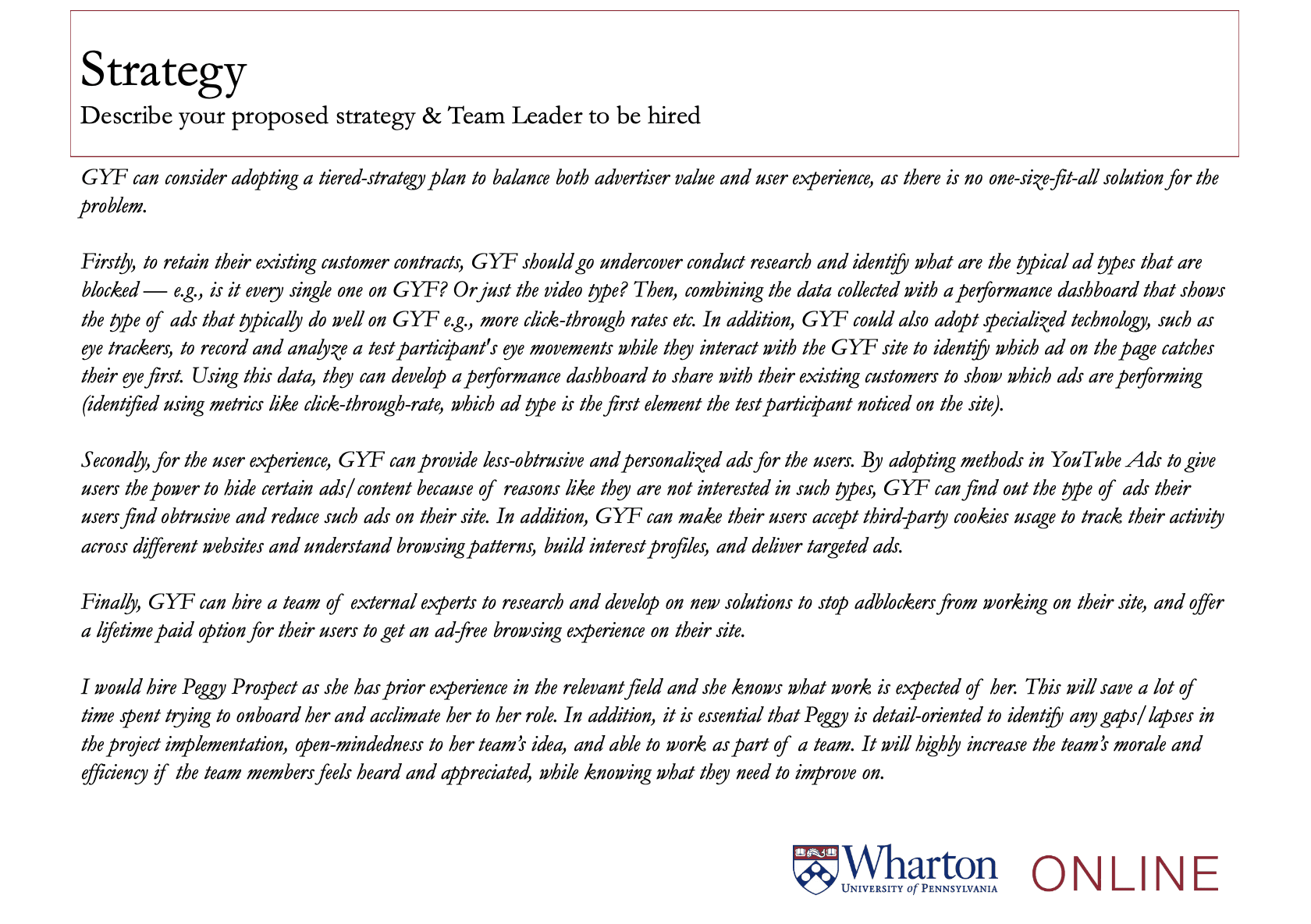
I identified the problem through descriptive research, then proposed a tiered strategy balancing two competing interests: keeping advertisers happy while improving the user experience enough to reduce ad-blocker usage. My solution had three layers:
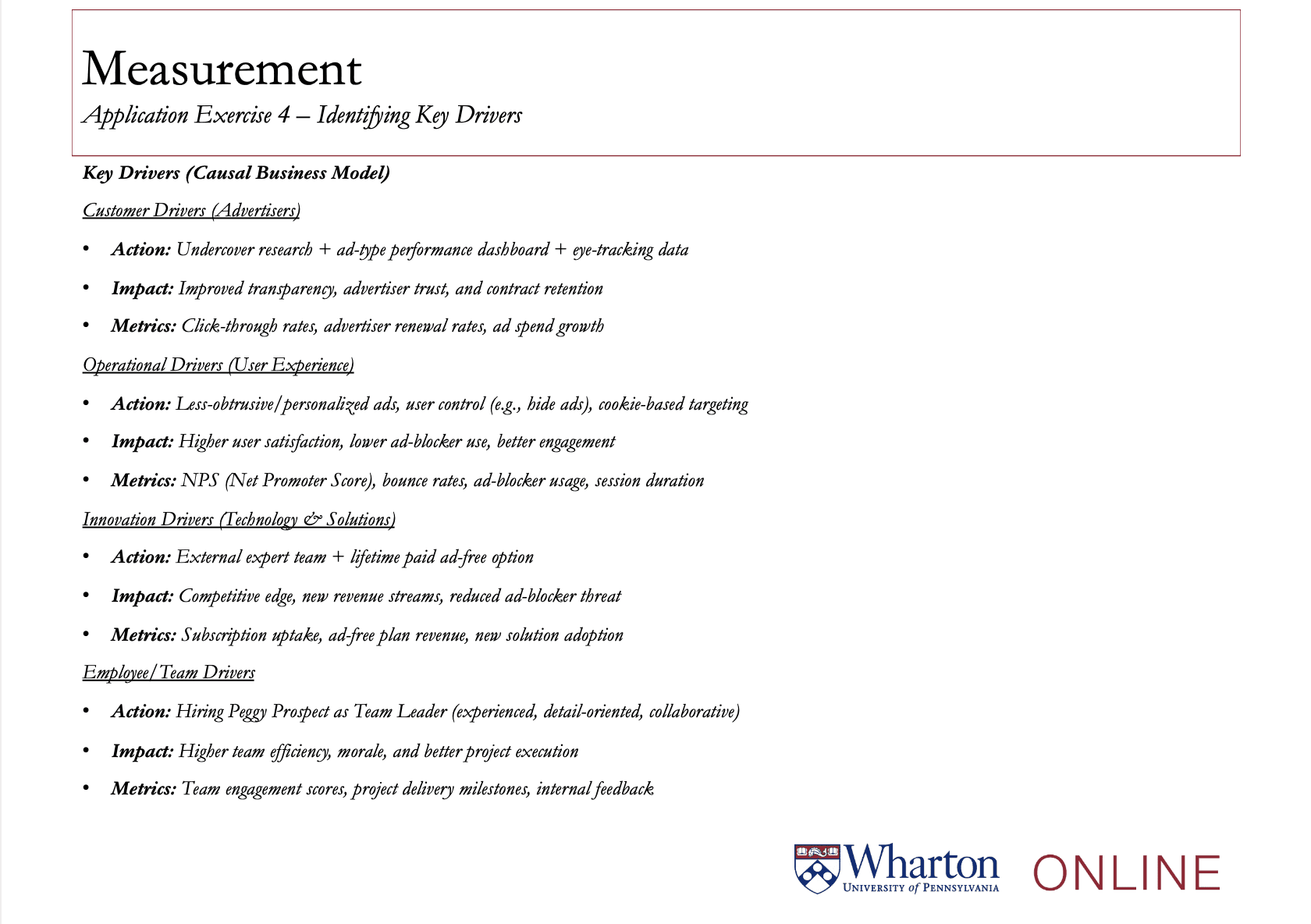
For advertisers — conduct undercover research to identify which ad types are most commonly blocked, then build a performance dashboard (using metrics like click-through rates and eye-tracking data) to show advertisers which of their ads are actually working. This rebuilds trust and justifies their spend.
For users — make ads less obtrusive by giving users control (e.g. hiding irrelevant ads, similar to YouTube), and use cookie-based targeting to serve more personalised, relevant ads. Less annoyance = less reason to use an adblocker.
For long-term revenue — hire an external expert team to develop technical solutions to block adblockers, and introduce a lifetime paid ad-free subscription as an alternative income stream so GYF isn't solely dependent on ad revenue.
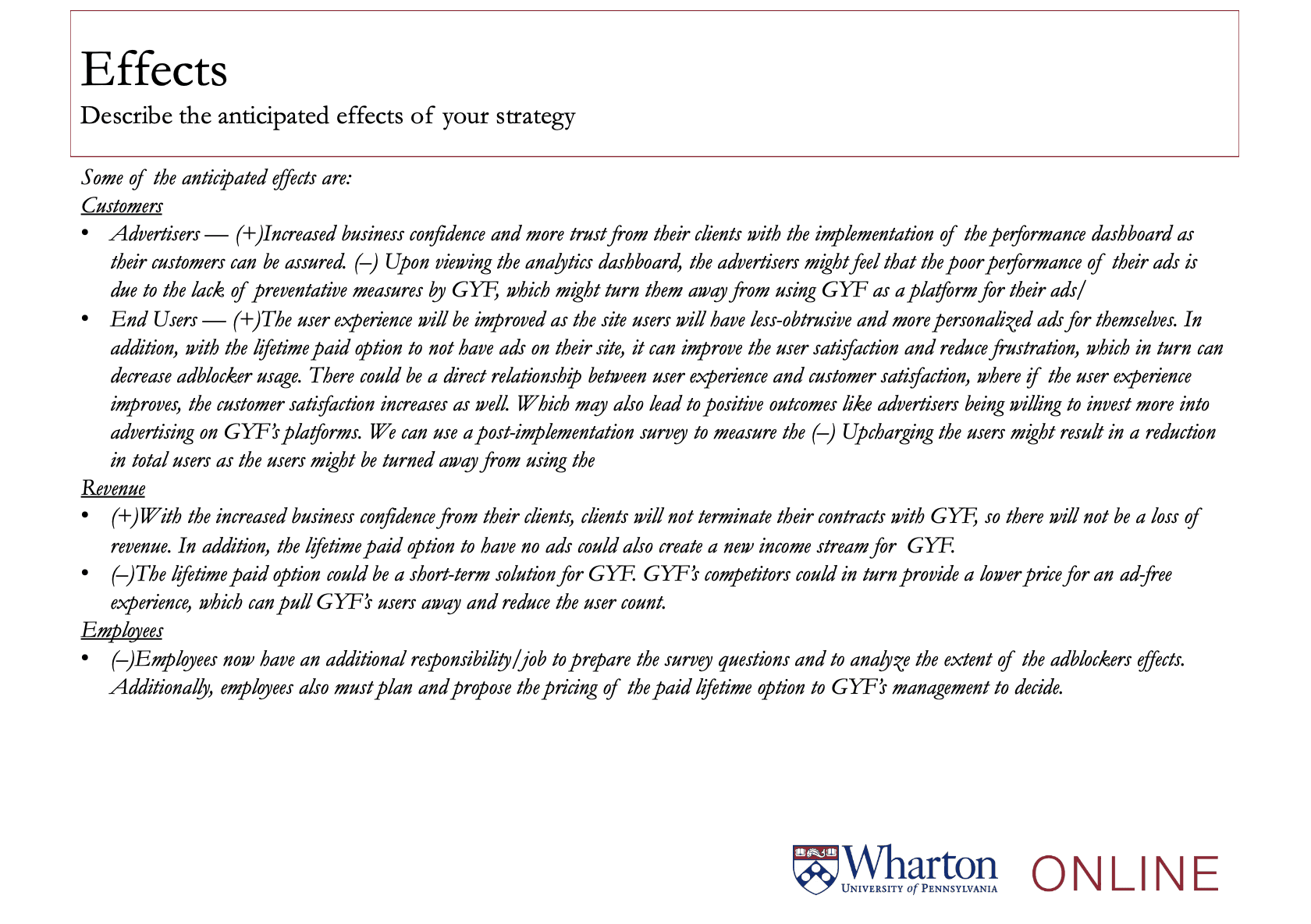
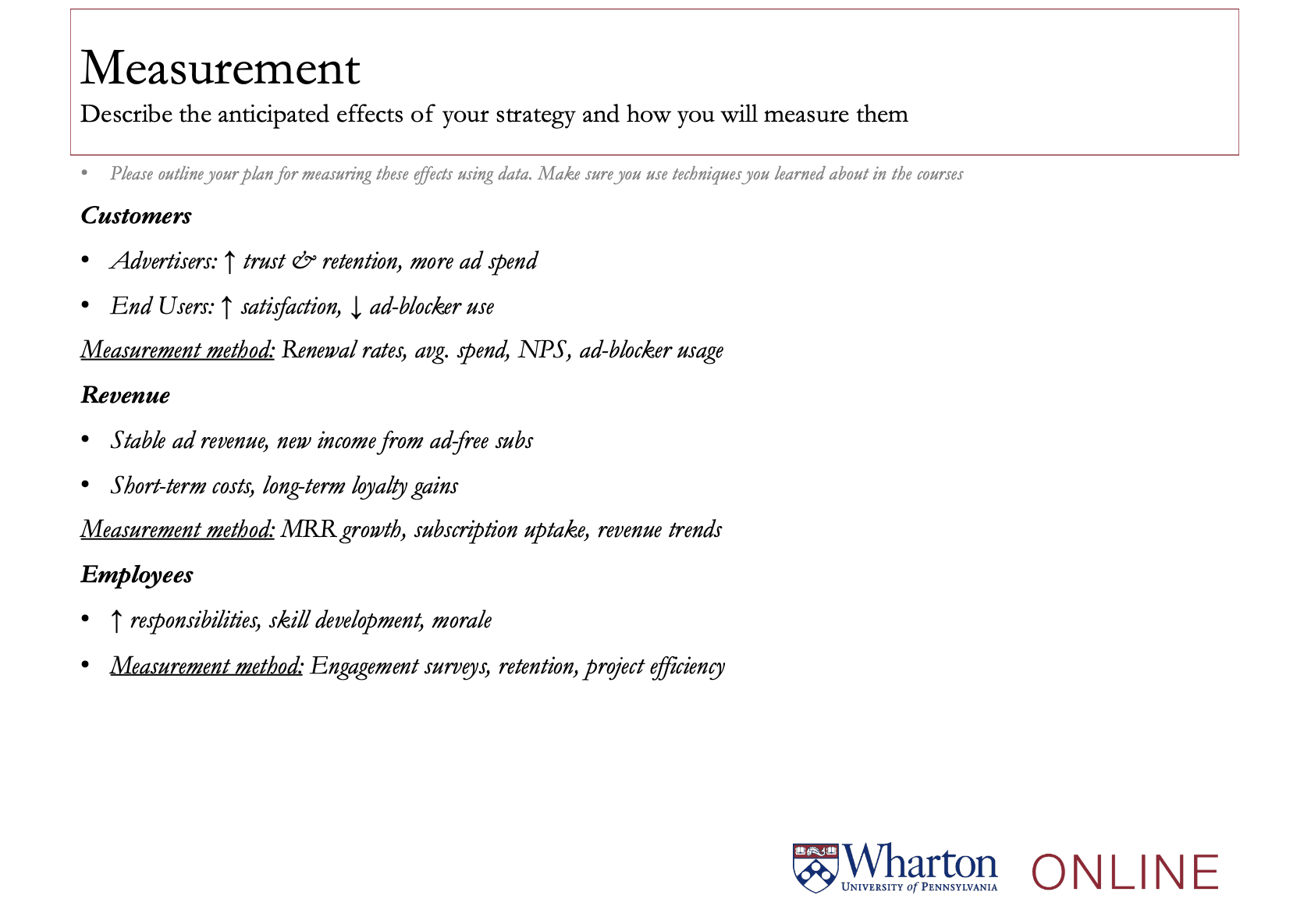
I then stress-tested the strategy by mapping out anticipated effects on customers, revenue, and employees — including honest trade-offs — before building a deterministic optimization model using linear programming to maximise ROI within UX and budget constraints. Finally, I defined clear metrics to measure success across all stakeholder groups.
year
2025
timeframe
1 week
category
Personal Project
01
02
03
04

05
06
07